Source Folding Bamboo Dish Rack for Kitchen, Dining, and Storage
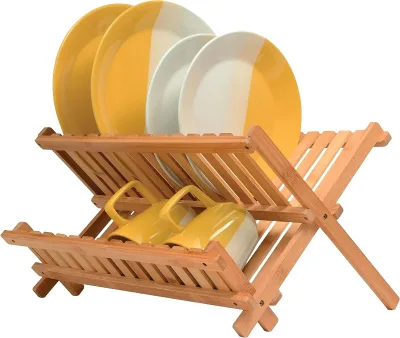
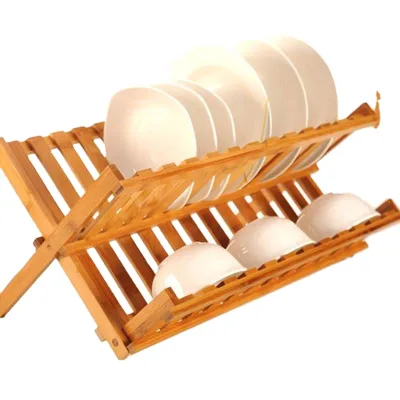
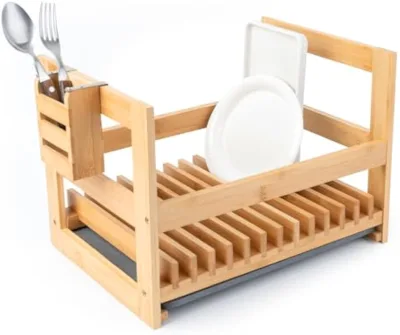
Compare 30 folding bamboo dish rack options from verified suppliers. These units feature square or common shapes, are made of bamboo or wood, and offer customization for household and tableware use with standing or folding designs.
Key considerations
Products List










Comprehensive Sourcing Guide
Folding Bamboo Dish Rack Sourcing Guide
Sourcing folding bamboo dish racks requires a nuanced understanding of material properties, structural design, and supply chain logistics. These products sit at the intersection of functional kitchenware and space-saving storage solutions, appealing to buyers who prioritize sustainability and compact living. The core keyword, "folding bamboo dish rack," suggests a specific subset of products that combine the natural aesthetic and antimicrobial qualities of bamboo with the space-efficiency of collapsible designs. However, market listings often blur the lines between rigid racks, folding racks, and general storage organizers. Buyers must carefully distinguish between products that are truly foldable and those that are merely modular or stackable, as this distinction significantly impacts packaging efficiency, shipping costs, and end-user utility.
The procurement landscape for these items is characterized by a high degree of customization and a wide variance in technical specifications. While bamboo is the primary material of interest, suppliers may offer wood alternatives or mixed-material constructions that affect durability and price. Furthermore, the term "dish rack" can encompass everything from simple draining boards to complex multi-tiered storage systems with integrated cutlery holders. This guide provides a structured approach to navigating these complexities, ensuring that buyers can identify suppliers who meet their specific quality, compliance, and logistical requirements without falling prey to ambiguous product descriptions or unrealistic performance claims.
Product Scope and Observed Listing Signals
The observed market signals indicate a diverse range of products that may or may not fit the strict definition of a folding bamboo dish rack. Listings show a price range of $0.5 to $13 USD, with minimum order quantities (MOQs) varying from 100 to 2000 pieces. This wide price band suggests significant differences in material grade, manufacturing complexity, and packaging standards. For instance, some listings describe products with dimensions of 11x8.1x2.1 cm, which are likely small, single-unit bamboo dishes rather than full-sized dish racks. Conversely, other listings specify larger dimensions such as 45.5x28x3.5 cm, which align more closely with functional dish racks or storage organizers. Buyers must scrutinize these dimensional data points to ensure they are evaluating the correct product category, as confusing small accessories with primary racks can lead to severe procurement errors.
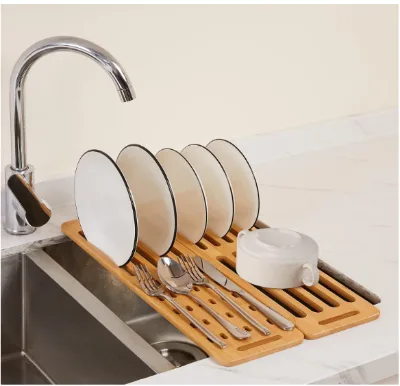
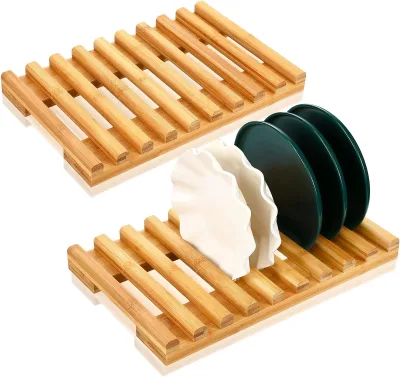
Another critical signal is the variation in product design and functionality. While the core keyword emphasizes "folding" mechanisms, many observed listings describe "non-folding racks" or "standing type" installations. Some products are explicitly labeled as "kitchen storage racks" made from solid wood with varnish, while others are described as "bamboo" with a natural color. The presence of "customized" sizes and "OEM/ODM" acceptance indicates that many suppliers are flexible manufacturers capable of producing bespoke designs. However, this flexibility also means that buyers must clearly define their requirements upfront. Relying on generic listing titles without verifying the actual folding mechanism, material composition, and intended usage can result in receiving products that do not meet the functional needs of the end consumer.
Technical Specifications to Verify
Verifying technical specifications is paramount when sourcing folding bamboo dish racks, particularly regarding dimensions, material integrity, and structural stability. Buyers should request detailed technical drawings that specify the folded and unfolded dimensions, as well as the weight capacity of each tier. For example, some observed listings mention a dimensional tolerance of less than ±1mm and a weight tolerance of less than ±1%, which are useful benchmarks for quality control. However, these tolerances may not apply to all products, especially those made from natural materials like bamboo, which can have inherent variations. Buyers must confirm whether these tolerances are standard for the supplier or specific to certain product lines, and ensure that the specified dimensions align with their packaging and retail display requirements.
Material composition and finish are equally critical factors that influence both the product's lifespan and its safety profile. While bamboo is often marketed as an eco-friendly and durable material, the actual construction may involve laminated bamboo strips, solid wood veneers, or even mixed materials. Some listings specify "solid wood with varnish color or primary color," which differs significantly from pure bamboo constructions. Buyers should verify the type of adhesive used in laminated bamboo products, as excessive formaldehyde emissions can pose health risks. Additionally, the finish applied to the bamboo, whether it is a natural oil, varnish, or paint, affects its resistance to water and stains. For dish racks, which are frequently exposed to moisture, a water-resistant finish is essential to prevent warping, cracking, or mold growth over time.
Compliance and Safety Documentation
Compliance and safety documentation are non-negotiable requirements for sourcing kitchenware products, particularly those intended for direct contact with food. Buyers must ensure that suppliers provide relevant certifications and test reports that verify the product's safety and environmental impact. While some listings mention FSC certification, which indicates responsible forest management, this is a low-confidence fact and should not be assumed without verification. Buyers should explicitly request FSC chain-of-custody certificates if sustainability is a key selling point. Additionally, products intended for food contact must comply with relevant food safety standards, such as FDA regulations in the United States or EU regulations in Europe. These standards typically limit the migration of harmful substances from the product to food, ensuring that the bamboo or wood materials do not leach toxins.
Beyond food safety, buyers should also consider the environmental and occupational health standards associated with the manufacturing process. Bamboo is often praised for its rapid renewability, but the processing involved in creating laminated bamboo products can be energy-intensive and involve chemical treatments. Buyers should inquire about the supplier's environmental management systems and their adherence to standards such as ISO 14001. Furthermore, the use of varnishes and adhesives must be compliant with low-VOC (Volatile Organic Compound) regulations in target markets. Requesting Material Safety Data Sheets (MSDS) for all coatings and adhesives used in production can provide valuable insights into the chemical composition of the product and help mitigate potential regulatory risks.
Cost Drivers and Commercial Terms
Understanding the cost drivers and commercial terms is essential for negotiating favorable procurement agreements and maintaining healthy profit margins. The observed price range of $0.5 to $13 USD reflects variations in material costs, labor intensity, and packaging complexity. Folding mechanisms, while space-efficient, add manufacturing complexity and may increase production costs compared to rigid designs. Buyers should analyze the cost breakdown to understand how much of the price is attributed to materials versus labor and overhead. Additionally, the MOQ of 100 to 2000 pieces suggests that smaller orders may incur higher per-unit costs due to setup fees and lower production efficiency. Buyers should negotiate MOQs based on their sales forecasts and consider the trade-off between lower unit prices and higher inventory holding costs.
Packaging and logistics are significant cost drivers that can impact the total landed cost of the product. Some listings mention "1PC/OPP Bag" or "CTN" (Carton) packaging, which affects the product's protection during transit and its shelf appeal. Folding racks are often designed to be compact when folded, reducing shipping volume and freight costs. However, buyers must verify the actual packed dimensions and weight to calculate accurate freight estimates. Additionally, the sample time of 7-15 working days indicates that lead times can vary, and buyers should factor this into their inventory planning. Clear communication regarding payment terms, such as deposits and balance payments, and incoterms, such as FOB or CIF, is crucial to avoid unexpected costs and delays.
Supplier Qualification and Quality Control
Supplier qualification and quality control are critical steps in mitigating procurement risks and ensuring consistent product quality. Buyers should conduct thorough due diligence on potential suppliers, including verifying their business licenses, production capabilities, and past performance. Visiting the factory or hiring a third-party inspection agency can provide valuable insights into the supplier's manufacturing processes, quality control systems, and working conditions. For bamboo products, it is essential to inspect the raw material storage and processing areas to ensure that the bamboo is properly dried and treated to prevent mold and insect infestation. Buyers should also review the supplier's quality control protocols, including incoming material inspections, in-process checks, and final product inspections.
Establishing clear quality standards and acceptance criteria is vital for maintaining product consistency. Buyers should define specific parameters for dimensions, weight, finish quality, and structural integrity, and communicate these requirements to the supplier. Pre-production samples should be approved before mass production begins to ensure that the final product meets the agreed-upon specifications. During production, periodic inspections can help identify and address issues early, reducing the risk of receiving defective goods. Post-production, a final random inspection based on statistical sampling methods, such as AQL (Acceptable Quality Limit), should be conducted to verify that the shipment meets the quality standards. Buyers should also establish a clear process for handling non-conforming products, including returns, replacements, or discounts.
Long-Term Procurement Checks
Long-term procurement checks involve continuous monitoring and evaluation of supplier performance and market trends to ensure sustained success. Buyers should regularly review supplier performance metrics, such as on-time delivery rates, product quality consistency, and responsiveness to issues. Building a strong relationship with the supplier can lead to better pricing, priority production, and collaborative problem-solving. Additionally, buyers should stay informed about changes in material costs, labor regulations, and environmental standards that may impact the supply chain. Regular audits and performance reviews can help identify areas for improvement and ensure that the supplier remains aligned with the buyer's strategic goals.
Market trends and consumer preferences are also evolving, and buyers must adapt their sourcing strategies accordingly. The growing demand for sustainable and eco-friendly products presents opportunities for sourcing bamboo items with verified certifications and transparent supply chains. Buyers should explore opportunities for product innovation, such as new folding mechanisms or integrated storage features, to differentiate their offerings in the market. Furthermore, diversifying the supplier base can mitigate risks associated with single-source dependencies and geopolitical uncertainties. By maintaining a proactive and strategic approach to procurement, buyers can secure a reliable supply of high-quality folding bamboo dish racks that meet the needs of their customers and support their business growth.
FAQs
Can I customize the logo on the folding bamboo dish rack?
Yes, customized logos are acceptable for this product. The supplier accepts OEM and ODM requests, allowing buyers to add their branding to the natural bamboo color or primary color options available for the kitchen storage rack.
What is the minimum order quantity for the bamboo dish rack?
The minimum order quantity is 100 pieces for the folding bamboo dish rack. Some listings indicate a range up to 2000 pieces, but the specific model with the JQ brand name starts at 100 pieces as a standard requirement.
How long does it take to receive a sample of the rack?
It takes 7 to 15 working days to receive a sample of the folding bamboo dish rack. This sample time applies to the high-grade solid wood or bamboo products originating from China before bulk production begins.
What are the dimensions of the medium size bamboo dish rack?
The medium size folding bamboo dish rack measures 45.5 by 28 by 3.5 centimeters. Another model has dimensions of 11 by 8.1 by 2.1 centimeters, so buyers should verify the specific model number for exact sizing requirements.
Is the folding bamboo dish rack suitable for household use?
Yes, the folding bamboo dish rack is designed for household use and general kitchen storage. It functions as a double-tier storage holder for dishes and bowls, featuring a standing type installation without requiring complex assembly.
What material is used to construct the kitchen storage rack?
The kitchen storage rack is constructed from solid wood with varnish color or primary color finishes. Some variants are made from bamboo, offering an eco-friendly option with a natural bamboo color for the folding design.
Does the folding bamboo dish rack come with installation services?
No, the folding bamboo dish rack is supplied without installation services. It is designed as a standing type unit that buyers can set up themselves, typically packed in single cartons or OPP bags for easy handling.